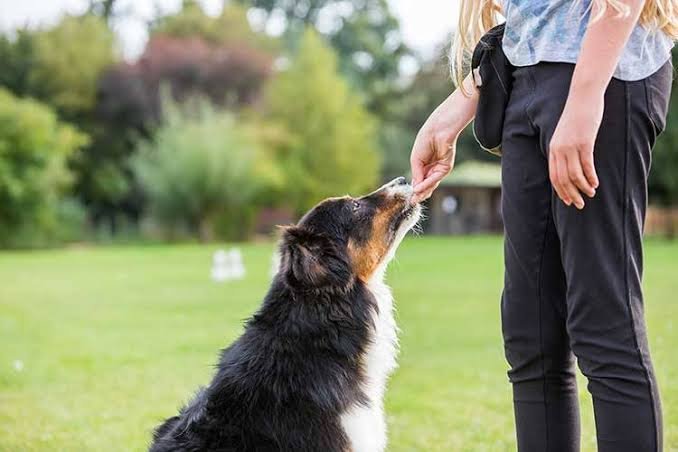
Rewarding good behavior builds trust and speeds up learning. Source: Animal Behavior College
Training your dog isn’t about exerting dominance—it’s about building a clear, reward-based line of communication. Whether you are housebreaking a puppy or teaching an adult dog new manners, positive reinforcement is scientifically proven to yield faster, longer-lasting results.
Here are the three core principles every dog owner needs to master.
1. Timing is Everything ⏱️
Dogs connect rewards to the exact action they are performing at that second. If your dog sits and you take 10 seconds to dig a treat out of your pocket, they might stand back up—meaning you just rewarded them for standing!
- The Fix: Use a marker word like “Yes!” or a clicker the exact millisecond their bottom touches the floor, then give the treat immediately after.
2. Use High-Value Rewards 🥓
Not all treats are created equal in your dog’s eyes. Dry kibble might work inside a quiet kitchen, but outside with squirrel distractions? You’ll need high-value motivation.
| Reward Level | Best For | Examples |
| Low Value | Quiet home environments, basic indoor reviews | Standard dry kibble, plain biscuits |
| Medium Value | Mildly distracting areas (e.g., backyard) | Commercial soft dog treats, cheese cubes |
| High Value | High-distraction settings (parks, leash walking) | Small pieces of cooked chicken, freeze-dried liver |
3. Keep Sessions Short and Frequent 🧠
Dogs have short attention spans! A single 30-minute training session will leave both you and your dog frustrated.
- Golden Rule: Aim for 3 to 5 minutes, 2 or 3 times a day. Ending on a successful, happy note leaves your dog excited for the next training session.
Step-by-Step: The “Look at Me” Focus Command
Before you can teach commands like sit or stay, you need your dog’s attention.
- Hold a treat near your dog’s nose, then bring it up toward your eyes.
- The moment your dog makes eye contact with you, say “Yes!” and give them the treat.
- Repeat 5 times until they automatically look at your face when you call their name.
Key Takeaway: Never punish a dog for not understanding a command. If they aren’t performing, step back, lower the difficulty, and reward the smallest attempt at progress!